
TL;DR:
- Legal and regulatory pitfalls are the main reasons for market entry failures in Bosnia and Herzegovina. Effective counsel is crucial for navigating complex legal fragmentation, entity setup, and ongoing compliance. Proactive legal strategies significantly reduce costs, delays, and operational risks.
Most market entry failures in Bosnia and Herzegovina trace back not to flawed commercial strategies, but to unseen legal and regulatory pitfalls that companies never anticipated. Decision-makers frequently assume that securing a local partner or engaging a generalist consultant is sufficient preparation. It rarely is. As geographic market entry specialists confirm, legal counsel plays a critical role by providing regulatory and compliance expertise, entity setup, and cross-functional integration that prevents costly mistakes in unfamiliar markets. This article explains why that counsel is indispensable, examines Bosnia's fragmented legal environment, and sets out what companies must do at each stage of entry.
Table of Contents
- Why legal counsel is indispensable for market entry
- Understanding Bosnia and Herzegovina's legal landscape
- Core mechanics of company setup and compliance
- Pitfalls and edge cases: Where companies get it wrong
- Why reactive legal strategies fall short: A practical perspective
- How Franjo Vucic Legal supports strategic market entry
- Frequently asked questions
Key Takeaways
| Point | Details |
|---|---|
| Legal counsel is essential | Expert legal advice is fundamental for compliance and avoiding costly mistakes in Bosnia and Herzegovina. |
| Jurisdiction matters most | Bosnia’s fragmented legal system means a one-size-fits-all strategy will quickly fail. |
| Structure setup is complex | Company formation involves multiple steps and real-world delays, requiring hands-on legal expertise. |
| Sector pitfalls abound | Certain industries and due diligence areas carry hidden legal risks best navigated by specialised counsel. |
| Proactive beats reactive | Early engagement of legal counsel transforms challenges into strategic opportunities for market entrants. |
Why legal counsel is indispensable for market entry
With the central problem established, it is essential to examine why legal counsel is foundational to any market entry plan, not an afterthought or a formality to be addressed once commercial negotiations are underway.
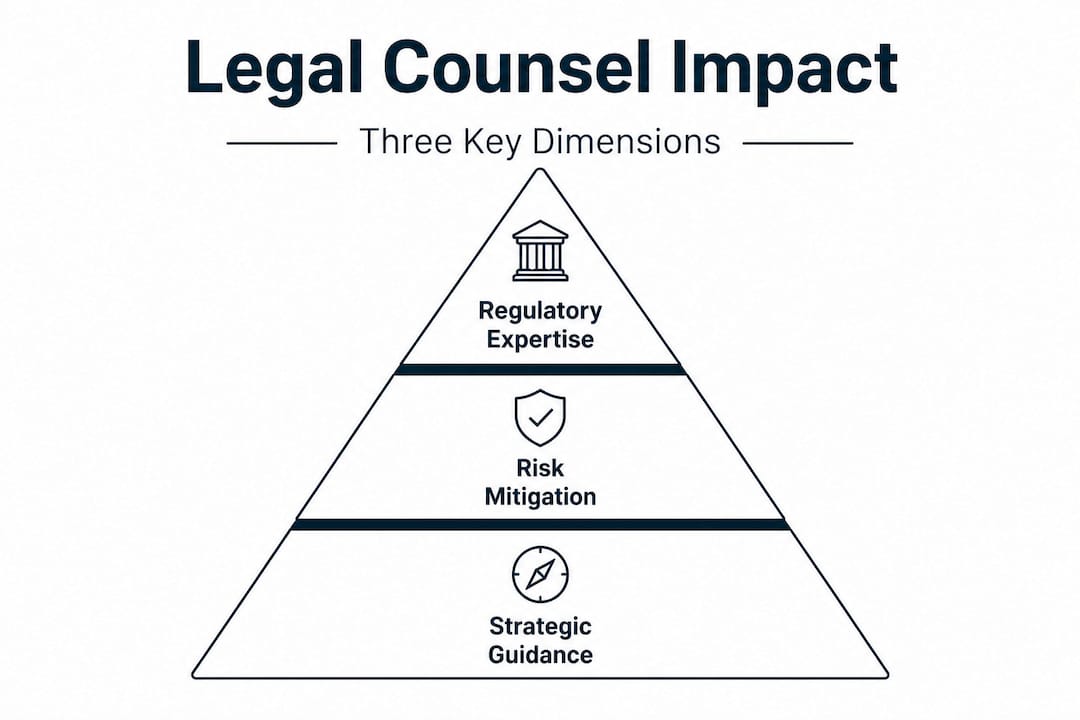
Effective legal counsel contributes across three core dimensions. First, regulatory expertise: understanding which rules apply, how they interact, and when approvals are needed before operations begin. Second, entity structuring: selecting and registering the correct legal form to match your liability, tax, and operational requirements. Third, cross-functional integration: ensuring that HR, procurement, real estate, and licensing decisions all align with applicable law from day one. As noted in a detailed geographic market entry playbook, missing any of these dimensions can generate errors that are exponentially more expensive to correct post-launch than to prevent at the outset.
The cost of poor navigation is not theoretical. In Bosnia and Herzegovina specifically, companies that attempt to replicate approaches used in neighbouring EU member states regularly encounter regulatory voids, conflicting cantonal requirements, or licensing obligations that were simply not visible during initial due diligence. Remediation, including unwinding incorrectly structured entities or challenging retrospective permit requirements, can take years and consume resources far exceeding the original legal budget.
Good counsel in this market behaves as a proactive risk manager rather than a passive document drafter. That means anticipating regulatory changes, maintaining working relationships with registration courts and ministries, and flagging risk early enough to influence strategic decisions. A practical legal guide to doing business in Bosnia and Herzegovina should address not only the entry phase but also ongoing compliance obligations, which are often underestimated.
"The most effective legal advisors in Bosnia and Herzegovina are those who understand both the letter of the law and the informal dynamics of its application. Technical knowledge alone is insufficient without local institutional fluency."
When evaluating counsel for this market, look for the following qualities:
- Local licensure and bar registration in the relevant entity (Federation, Republika Srpska, or both)
- Established relationships with commercial courts, agency registrars, and sector regulators
- Multi-jurisdictional experience across both entities and Brčko District
- Track record with foreign direct investment mandates of comparable scale
- Capacity for cross-border coordination, particularly for EU-based parent companies
Understanding the role of legal advisor within your leadership team is essential before engaging counsel, as it shapes how legal input is integrated into strategic decisions rather than confined to transactional tasks.
Pro Tip: Brief your legal counsel before signing any letter of intent or heads of terms. Committing to a transaction structure before legal review significantly reduces the options available to counsel later, often at material cost to your position.
Understanding Bosnia and Herzegovina's legal landscape
Having established the necessity of legal counsel, it is important to examine the unique jurisdictional complexities that distinguish Bosnia and Herzegovina from other European markets. No other country in the region presents quite this degree of structural fragmentation at the regulatory level.
Bosnia and Herzegovina operates under a layered constitutional arrangement. The country is divided into two main entities: the Federation of Bosnia and Herzegovina, which is itself divided into ten cantons each with legislative competence, and Republika Srpska, which functions as a more centralised entity. Brčko District sits as a self-governing administrative unit under direct state supervision. This means that a single business decision, such as opening a branch office or acquiring real estate, can require engagement with multiple sets of regulations, regulatory bodies, and registration procedures depending on the jurisdiction in which it falls.

As market challenge data confirms, navigating this fragmented system across the Federation's cantons, Republika Srpska, and Brčko District demands experienced counsel capable of managing duplicative regulations, entity selection, and multi-jurisdictional approvals simultaneously. A single-track approach that works in centralised markets like Serbia or Slovenia will fail here.
The table below summarises key regulatory differences and practical challenges across jurisdictions:
| Jurisdiction | Regulatory body | Key characteristics | Notable challenges |
|---|---|---|---|
| Federation of BiH (10 cantons) | Cantonal and entity-level ministries | Dual cantonal and entity-level rules | Overlapping competencies; canton-specific licensing |
| Republika Srpska | RS Government ministries | More centralised structure | Separate corporate registry; distinct labour laws |
| Brčko District | District Government | Harmonised but distinct rules | Unique tax and customs regime |
| State level | Council of Ministers | Limited direct business regulation | Relevant for defence, telecoms, banking oversight |
Effective counsel navigates these layers by mapping out approval sequences, identifying jurisdictional overlaps early, and coordinating filings across multiple registries where necessary. For companies pursuing a doing business in Bosnia strategy that spans more than one entity or district, this coordination is not optional. It is operationally critical.
Local nuance matters in ways that purely technical legal analysis will miss. Sanction screening must account for both EU and domestic lists. Property status checks are essential given the prevalence of state-owned land. Licensing timelines vary significantly between cantons, particularly for regulated activities such as food production, waste management, or financial services. Companies that engage proactive legal advice early are better positioned to sequence these requirements efficiently and avoid delays caused by incomplete or incorrectly sequenced applications.
One frequently underestimated issue is that regulatory registers across different jurisdictions are rarely synchronised. A company may be validly registered in one entity while subject to different obligations in another without any automatic notification mechanism. Counsel who functions as a legal partner for growth monitors this proactively rather than waiting for problems to surface.
Core mechanics of company setup and compliance
With the regulatory environment mapped, the focus turns to the specific mechanics of establishing a business entity and achieving compliance in Bosnia and Herzegovina. These steps are where legal counsel delivers the most visible day-to-day value.
The most common legal vehicle for foreign investors is the društvo s ograničenom odgovornošću (d.o.o.), equivalent to a limited liability company. As Bosnia's 2025 Investment Climate Statement confirms, this requires a minimum share capital of BAM 2,000, registration with the relevant entity's commercial court, tax and VAT registration, bank account opening, and, for foreign directors, work and residence permits. Many of these steps can be handled remotely through a power of attorney granted to local counsel, which is an arrangement frequently used by European-based executives who cannot be physically present throughout the process.
The numbered sequence below reflects the standard company formation process:
- Prepare and notarise founding documents (articles of association, shareholder decisions)
- Register with the entity-level commercial court
- Obtain a tax identification number from the Tax Administration
- Register for VAT with the Indirect Taxation Authority (state-level body)
- Open a corporate bank account
- Apply for any sector-specific licences or operational permits
- Register employment contracts with the relevant labour inspectorate
- Obtain work and residence permits for foreign nationals in director roles
The key data benchmarks are instructive. Whilst the legal minimum for company formation is five business days, real-world formation typically takes between 20 and 45 days, driven by court backlogs, notarisation queues, and sequential approval requirements across multiple agencies. Companies entering regulated sectors should add further time for licensing, which is rarely parallel to registration.
| Step | Legal minimum | Realistic timeline | Key risk |
|---|---|---|---|
| Court registration | 5 days | 10 to 20 days | Incomplete documents, wrong jurisdiction |
| Tax/VAT registration | 5 to 7 days | 10 to 15 days | Entity mismatch, missing signatories |
| Bank account opening | 3 to 5 days | 5 to 15 days | AML screening delays |
| Sector licence (where required) | Varies | 30 to 90 days | Incomplete prior approvals |
| Work/residence permits | 15 to 30 days | 30 to 60 days | Documentation requirements |
Pro Tip: Engage counsel to conduct a pre-registration compliance audit before any documents are submitted. Submissions with deficiencies reset waiting periods and, in some courts, place applications at the back of the queue entirely.
Reviewing a startup compliance checklist calibrated to Bosnia and Herzegovina will help executive teams understand precisely which documentation is required at each stage. Understanding the broader corporate law framework is equally important, particularly for multinational companies seeking to align their Bosnia entity with group-level governance structures.
Pitfalls and edge cases: Where companies get it wrong
Whilst the mechanics seem straightforward in theory, the reality involves numerous pitfalls that even experienced executives, familiar with other emerging European markets, consistently miss.
Real estate and land-related transactions represent a particularly high-risk area. As due diligence research highlights, verifying land records requires accounting for multiple and often outdated cadastral entries, state property status affecting an estimated 70 to 80 per cent of territory, urban planning alignment, third-party occupations, and sanctions exposure. Non-digitised records in many municipalities significantly increase the risk of acquiring encumbered or legally ambiguous assets. Without specialist real estate legal counsel, companies have committed to property transactions only to discover post-signing that the asset is subject to restitution claims or unresolved state ownership disputes.
The most frequently encountered pitfalls include:
- Undisclosed encumbrances on real property not reflected in the current land register
- Assumption of entity-level uniformity, where regulations in Republika Srpska are incorrectly assumed to mirror Federation rules
- Insufficient sanctions screening, particularly for counterparties with indirect links to sanctioned individuals or entities
- Underestimating cantonal variation in business licensing, labour, and environmental requirements
- Failure to verify urban planning designations before committing to development or construction
Sector-specific edge cases add further complexity. As Bosnia's investment climate assessment documents, regulated sectors such as fintech, energy, and defence require prior licensing before operations commence. Foreign ownership limits, including a cap of 49 per cent in defence and media, are non-negotiable and cannot be structured around without falling foul of applicable law. Political disputes over state property at the entity versus state level can complicate acquisition timelines unpredictably.
"The consequences of inadequate due diligence in Bosnia and Herzegovina frequently extend beyond financial loss. Regulatory non-compliance can result in operational shutdowns, licence revocations, and reputational exposure that materially affects a company's position across the broader Western Balkans region."
A thorough regulatory compliance checklist should be completed before any asset or equity transaction is signed. Pre-engagement legal screening is not a precaution reserved for large-scale deals. Even mid-market acquisitions and lease agreements in this market have generated expensive disputes when initial due diligence was abbreviated.
Pro Tip: For any real estate or acquisition transaction, commission an independent cadastral review and cross-reference results against the land register, urban plan, and state property registers simultaneously. These sources frequently contain conflicting information that only reveals itself when examined in parallel.
Why reactive legal strategies fall short: A practical perspective
There is a persistent assumption amongst experienced international executives that legal counsel is most useful once a problem has materialised. In most developed markets, this reactive model is merely inefficient. In Bosnia and Herzegovina, it is genuinely costly.
The structural opacity of the legal system means that many compliance failures are not immediately visible. A company can operate for months in a regulatory grey area, accumulating liability, before a routine inspection or licensing renewal triggers enforcement action. By that point, legal counsel is managing remediation rather than prevention, a far more expensive and disruptive engagement model. Companies that engage proactive legal support from the initial market assessment phase consistently report faster approvals, lower total legal costs, and fewer operational disruptions.
Consider a concrete illustration. A European technology company entering the Federation assumes its GDPR compliance programme satisfies local data protection obligations. It does not. Bosnia and Herzegovina has its own data protection framework, administered separately, with distinct registration and consent requirements. A counsel engaged early would flag this during the entry planning phase. Counsel engaged after operations launch is instead managing a regulatory investigation whilst simultaneously attempting to restructure the compliance programme, often under pressure from a regulator that has already formed a negative impression.
The companies that turn compliance obligations into competitive advantages share a common characteristic: they treat legal counsel as a strategic input rather than a transactional cost. A well-structured entry in Bosnia and Herzegovina, with clear entity governance, compliant employment arrangements, and properly licenced operations, signals credibility to local counterparts, regulators, and future investors. In markets where institutional trust is hard-won, that signal carries material commercial value. Engaging experienced cross-border legal strategy support before commitments are made is consistently the more profitable choice.
How Franjo Vucic Legal supports strategic market entry
For companies ready to take the next step, access to experienced, locally rooted legal support is essential to converting market entry plans into operational reality.
Vucic.legal provides strategic legal guidance for growth-oriented companies entering Bosnia and Herzegovina and the broader European market. The firm's services span corporate and commercial law, entity setup, cross-border transactions, regulatory compliance, real estate, and dispute management. For executive teams unfamiliar with Bosnia's multi-layered legal environment, the firm offers structured onboarding support that maps jurisdictional requirements, sequencing, and risk exposure before any commitment is made. A detailed overview of available legal services and the foundational corporate law essentials relevant to market entry are accessible directly through the firm's advisory resources. Early engagement ensures that legal strategy aligns with commercial objectives from the outset, rather than being retrofitted after commitments are made.
Frequently asked questions
What is the most common legal mistake when entering Bosnia and Herzegovina?
Overlooking the need to adapt strategies to local, often overlapping, regulations is the single most common legal misstep for new entrants. Bosnia's fragmented legal system across the Federation's ten cantons, Republika Srpska, and Brčko District makes a standardised approach unworkable.
How long does it really take to set up a company in Bosnia and Herzegovina?
Though the legal minimum is five days, most company formations take 20 to 45 days in practice due to bureaucratic and regulatory delays across multiple agencies and registration bodies.
What sectors require special legal attention when entering this market?
Energy, fintech, and defence require particular legal scrutiny because of licensing requirements and ownership limits, including a 49 per cent foreign ownership cap in defence and media.
Can legal counsel really accelerate market entry?
Yes. Local counsel expedites approvals, manages bureaucratic sequencing, and reduces costly setbacks by handling company formation and permits remotely via power of attorney where direct presence is not possible.
Do I need separate legal counsel for each entity or region in Bosnia and Herzegovina?
One firm can coordinate the process, but expertise spanning all jurisdictions is essential given differing regional rules across the Federation, Republika Srpska, and Brčko District. Counsel without multi-jurisdictional reach will create gaps in coverage.